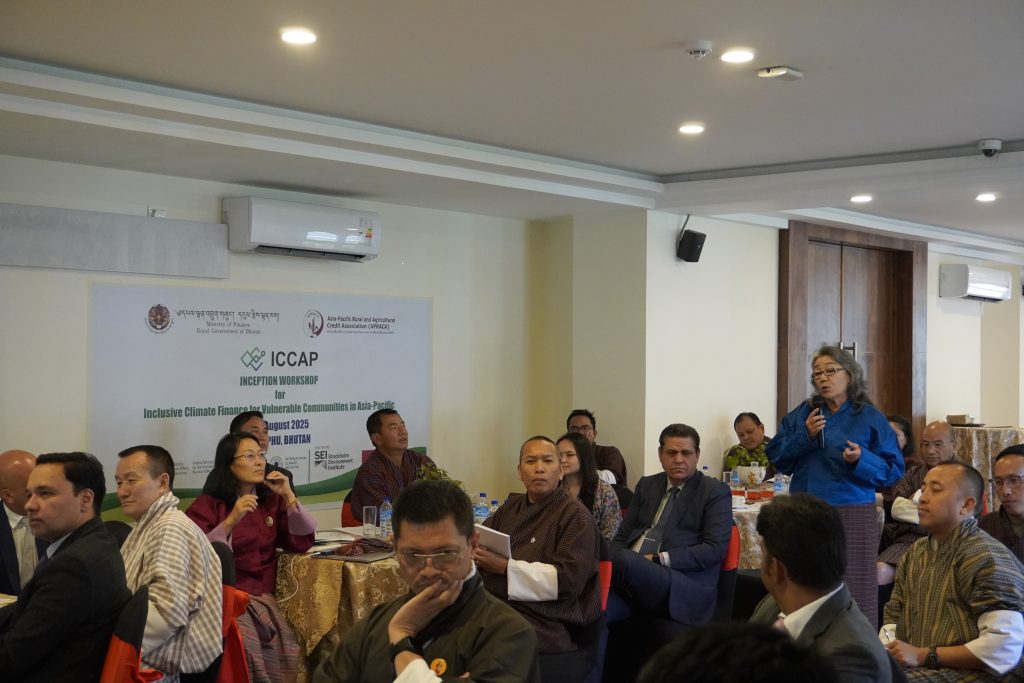
The Department of Macro-Fiscal and Development Finance under the Ministry of Finance, Royal Government of Bhutan, in collaboration with the Asia-Pacific Rural and Agricultural Credit Association (APRACA), hosted the national inception workshop for the Inclusive Climate Finance for Vulnerable Communities in the Asia-Pacific (ICCAP) project on 20 August 2025. The workshop marked the formal launch
The Department of Macro-Fiscal and Development Finance under the Ministry of Finance, Royal Government of Bhutan, in collaboration with the Asia-Pacific Rural and Agricultural Credit Association (APRACA), hosted the national inception workshop for the Inclusive Climate Finance for Vulnerable Communities in the Asia-Pacific (ICCAP) project on 20 August 2025. The workshop marked the formal launch of the five-year initiative in Bhutan, supported by the International Climate Initiative (IKI) of Germany, and implemented by APRACA, the Stockholm Environment Institute (SEI), and Appui au Développement Autonome (ADA).

Bhutan, despite its carbon-negative status, faces high climate risks due to its fragile Himalayan ecosystems and climate-sensitive sectors, including agriculture and forestry. The ICCAP project aims to enhance the flow of public and private climate adaptation finance to the most vulnerable smallholder farmers, women, and rural communities, thereby helping them adapt to the impacts of climate change.
The workshop focused on Work Package 1 Policy Analysis, Cooperation, and Engagement, led by APRACA, which aims to strengthen national policy and regulatory frameworks to create an enabling environment for inclusive climate finance. The initiative will work closely with the Ministry of Finance, Ministry of Energy and Natural Resources, Royal Monetary Authority, and other stakeholders to align with Bhutan’s Nationally Determined Contributions (NDCs) and National Adaptation Plan (NAP).
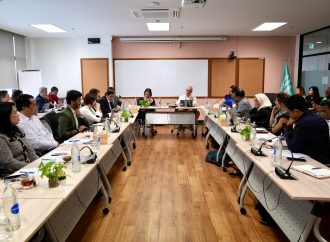
Participants included government agencies, financial institutions, development partners, civil society organisations, and technical experts. They engaged in discussions to identify policy barriers, explore opportunities for innovation, and commit to coordinated actions for delivering climate finance effectively to the grassroots.

The workshop concluded with a strong call for collaboration to ensure climate finance in Bhutan is accessible, equitable, and impactful, contributing to national resilience and sustainable development goals.