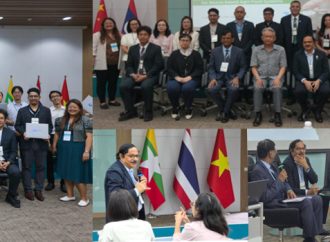
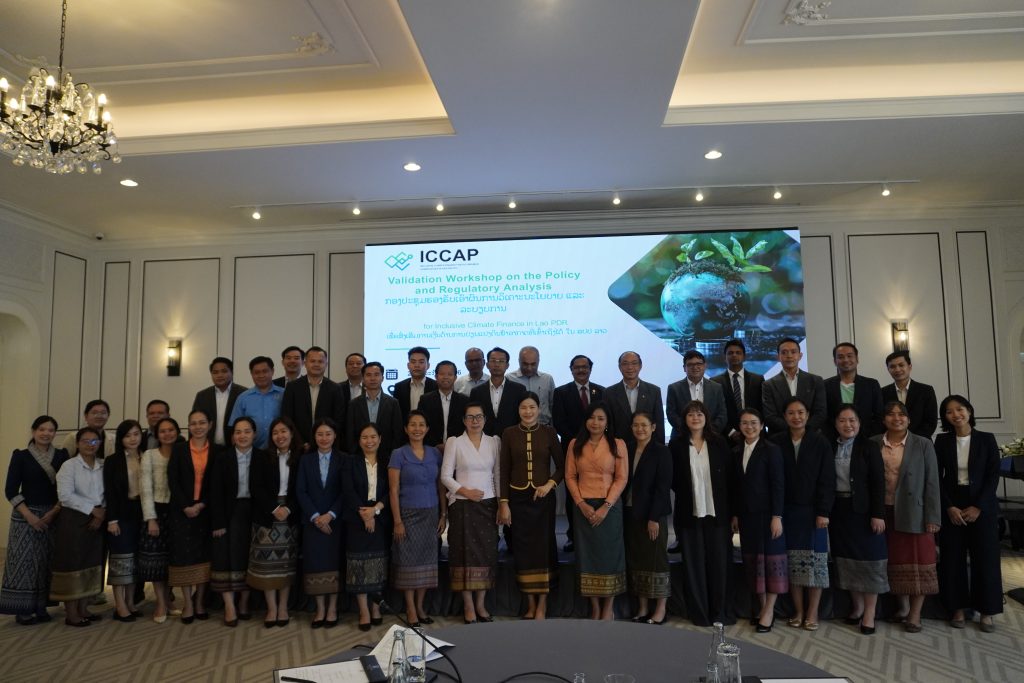
The Asia-Pacific Rural and Agricultural Credit Association (APRACA), in collaboration with the Stockholm Environment Institute (SEI), organized a validation workshop in Vientiane on 28 July 2026 to review the findings of a comprehensive policy and regulatory analysis on inclusive climate finance in the Lao PDR. The workshop is one of the key activities of Work
The Asia-Pacific Rural and Agricultural Credit Association (APRACA), in collaboration with the Stockholm Environment Institute (SEI), organized a validation workshop in Vientiane on 28 July 2026 to review the findings of a comprehensive policy and regulatory analysis on inclusive climate finance in the Lao PDR. The workshop is one of the key activities of Work Package 1 under the Inclusive Climate Finance for Vulnerable Communities in Asia-Pacific (ICCAP) project, which is supported by Germany’s International Climate Initiative (IKI).
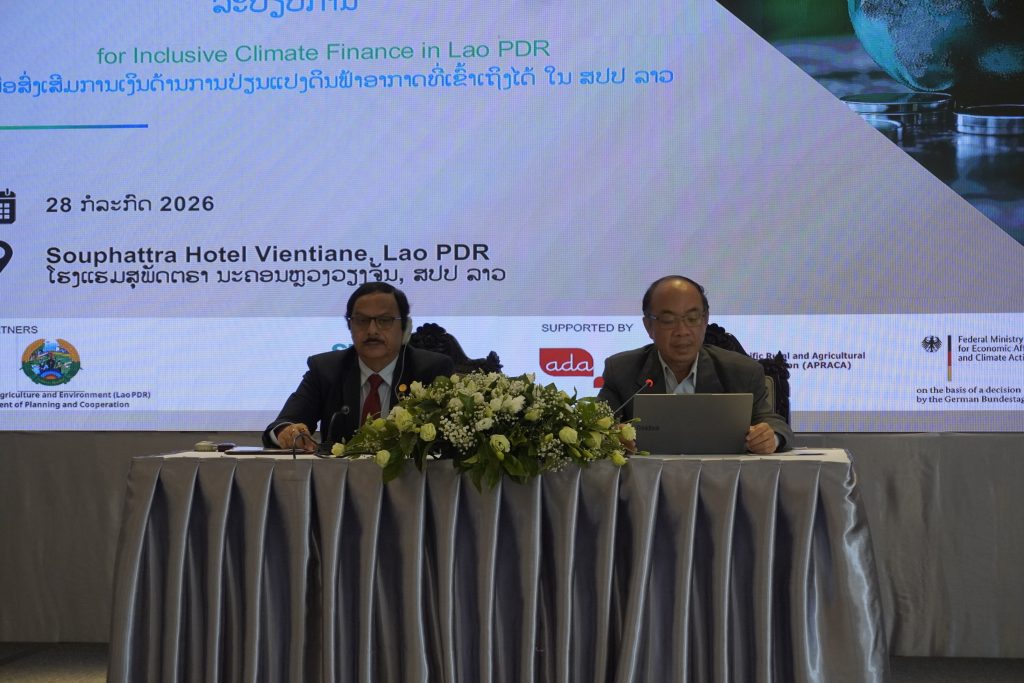
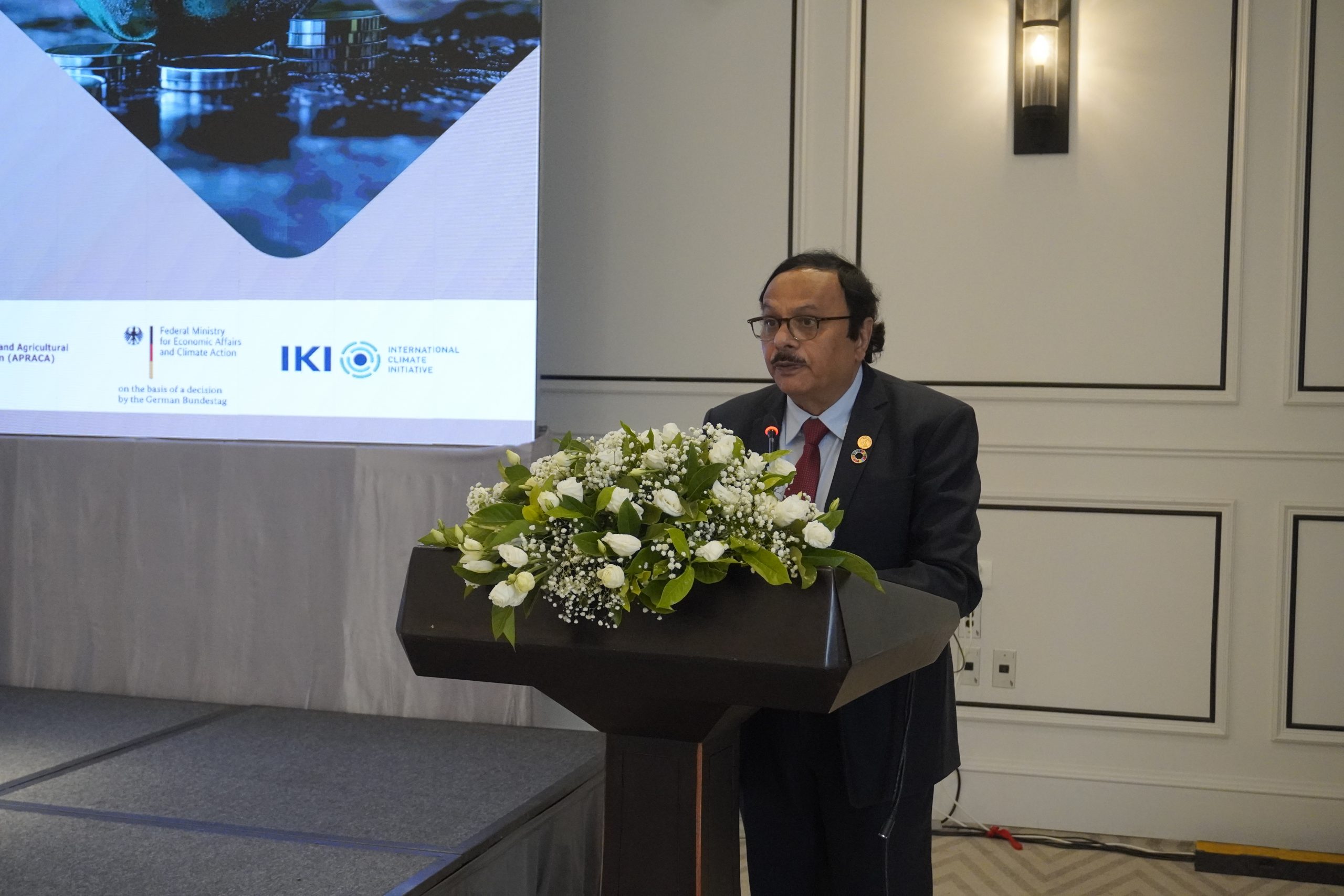
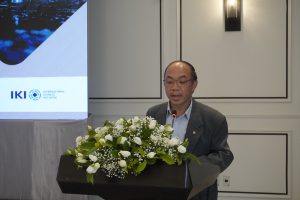
The Deputy Director General of the Department of Planning and Cooperation, Ministry of Agriculture and Environment, Mr. Thevarack Phonekeo, graced the opening session of the workshop. In his opening remarks, Mr. Phonekao said that “Inclusive climate finance must reach the farmers, households, and communities on the front lines of climate change. Together, we must strengthen the policies and partnerships that make this possible.” Dr. Prasun Kumar Das, the Secretary General of APRACA, highlighted that Lao PDR has established a solid policy foundation, including the National Strategy on Climate Change, the Nationally Determined Contribution, and the National Green Growth Strategy. However, considerable challenges remain in translating these commitments into climate financing that effectively reaches vulnerable communities.
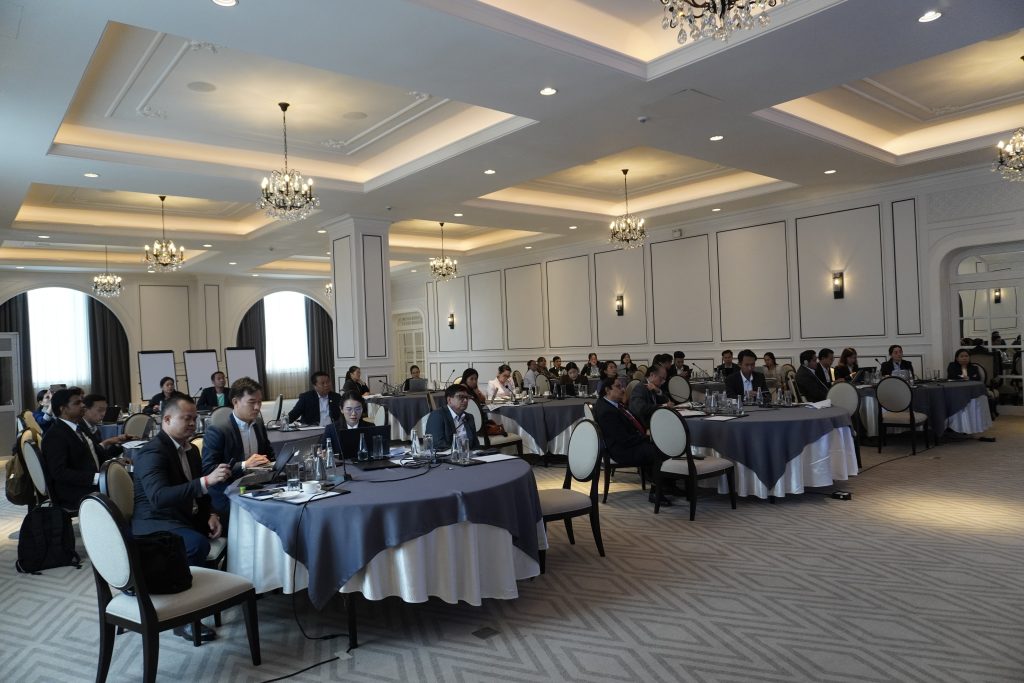
The analysis examined 15 key policy instruments and found that while Lao PDR has a strong policy mandate for climate and blended finance, the actual delivery of finance to vulnerable communities, particularly women, smallholder farmers, and ethnic minority groups, remains limited. The framework currently stops at the sovereign and project levels, with few operational channels reaching communities through financial service providers.
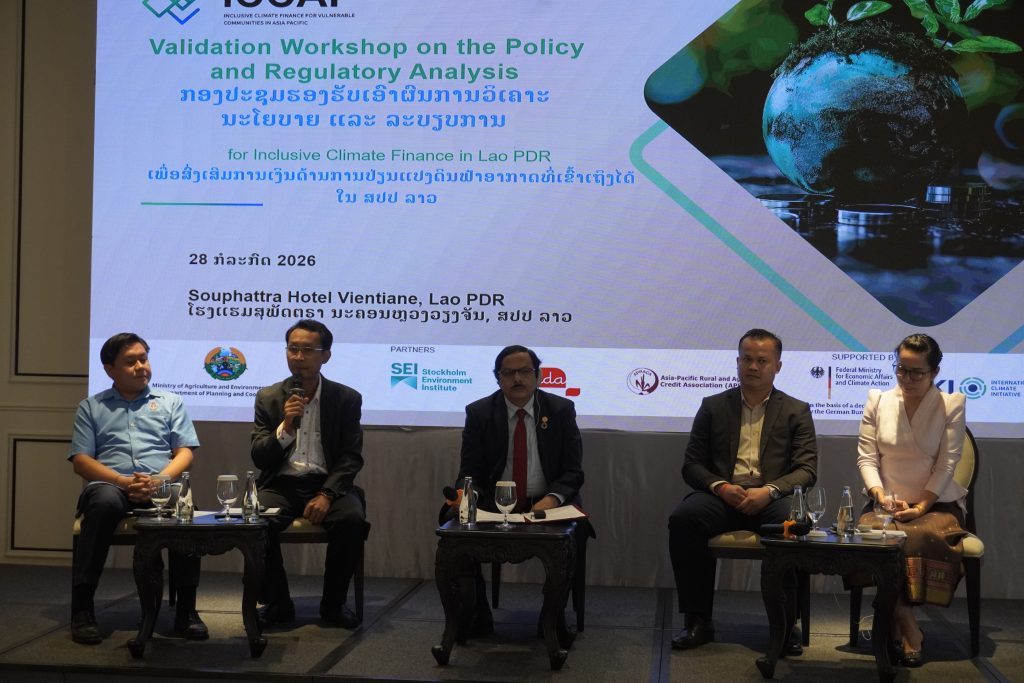
A notable finding from the analysis is the emergence of the Climate and Sustainable Finance Hub, anchored at the Ministry of Finance, as a promising institutional mechanism to address coordination challenges in climate finance. Although the Hub is still in its early stages of implementation, it is already serving as a technical platform to coordinate reforms, build capacity, and mobilise resources for climate action and sustainable development.
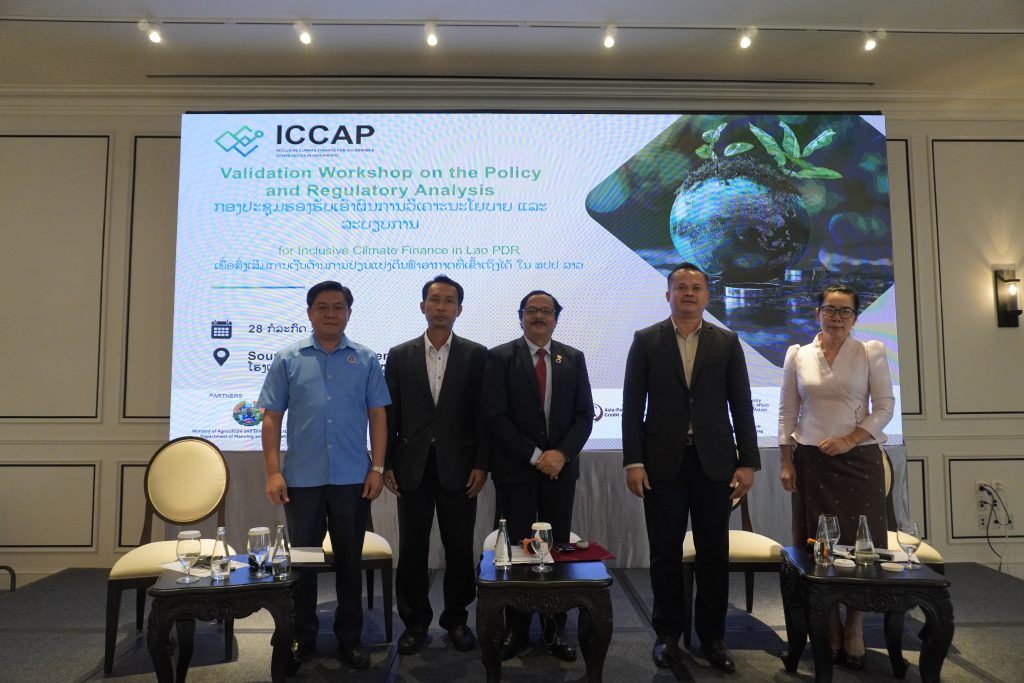
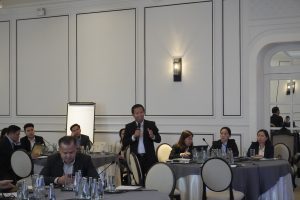
During a panel discussion, Mr. Thongvilay Senpatham, Deputy Director of the Economic and Financial Policy Department at the Ministry of Finance, highlighted that the Hub has been functioning well and is actively discharging its mandates in close coordination with key ministries and line departments. He emphasised the critical role the Hub plays in advancing climate finance in Lao PDR.
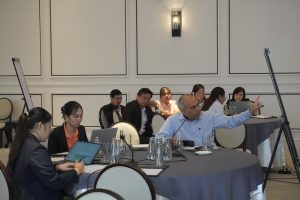
The workshop brought together representatives from the Ministry of Agriculture and Environment, the Ministry of Finance, the Bank of the Lao PDR, financial institutions, development partners, and civil society. Participants discussed the findings, identified policy
gaps, and co-developed actionable recommendations to strengthen the enabling environment for inclusive climate adaptation finance.
The validated findings and recommendations will be incorporated into the final policy analysis report, which will also inform capacity-building efforts and policy briefs in the coming years. The ICCAP project will continue to work closely with the Ministry of Agriculture and Environment, the project’s focal ministry, and other national stakeholders to strengthen policy frameworks, improve financial inclusion, and promote local innovation in climate adaptation.
 |
 |
 |
 |